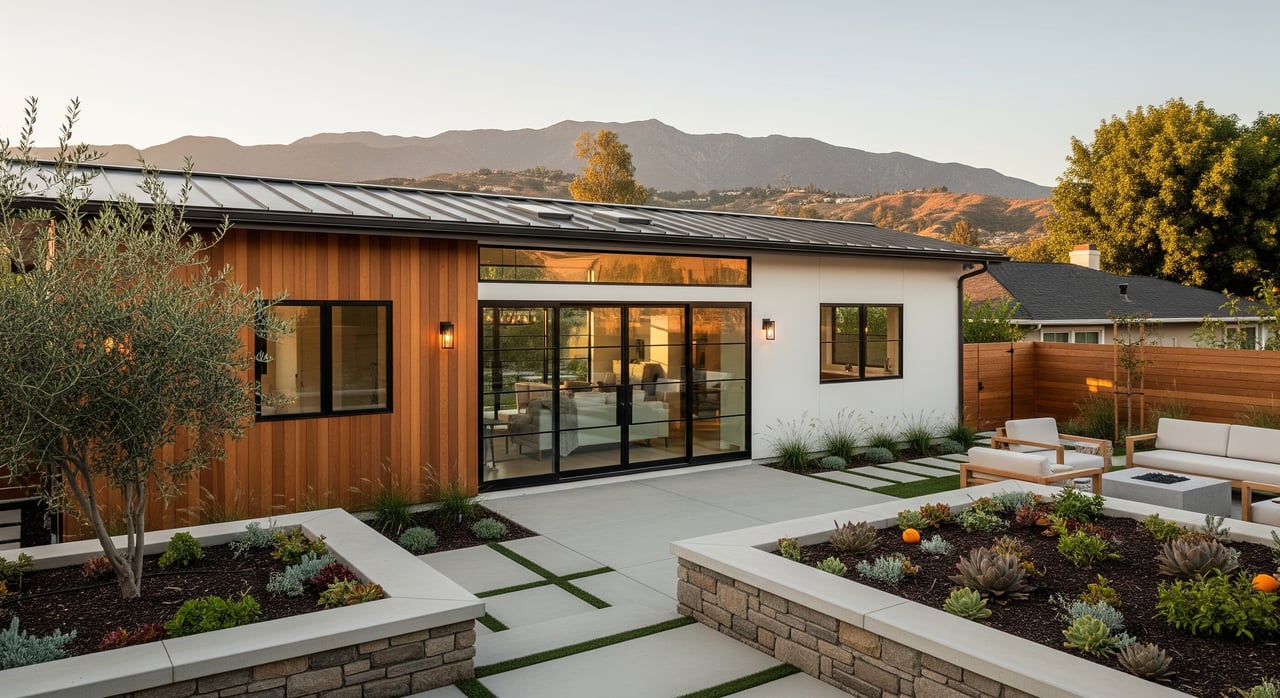
Thinking about building an ADU in Glendora? If you want space for family, extra rental income, or more flexibility when you sell, you are not alone. The good news is California has streamlined ADU rules, and Glendora follows that framework with local standards. In this guide, you will learn what counts as an ADU, how permits work, what it typically costs, and how an ADU can affect value. Let’s dive in.
ADU types explained
An accessory dwelling unit is a secondary home on the same lot as your primary residence. You commonly see four types:
- Detached ADU: a new, separate structure in the yard.
- Attached ADU: connected to the main home.
- Conversion ADU: built within existing space, such as a garage or part of the home.
- Junior ADU (JADU): created within the existing home, typically up to about 500 square feet, with an efficiency kitchen.
Each type must meet building code and local standards. JADUs often have owner-occupancy conditions, so confirm current rules with the city.
California rules at a glance
State law requires cities to use a ministerial review for compliant ADUs. This means if your plans meet objective standards, the city reviews and approves without a discretionary hearing.
Size allowances are set by state law and local codes. Many projects can reach up to about 1,200 square feet depending on lot, type, and zoning, but Glendora may set specific objective caps.
Parking rules are flexible. In many cases, you may not need new parking spaces, for example if the ADU is within one half mile of transit or you are converting a garage or carport.
Fees are limited for smaller units. Many ADUs under 750 square feet are exempt from certain development impact fees under state law. Utility connections are required, and providers may charge for hookups or upgrades.
Glendora permitting essentials
Glendora applies the statewide framework and adds objective local standards. Your first step is to confirm what applies to your property with the City of Glendora Planning Division and Building & Safety.
Key items to verify with city staff:
- Where ADUs are allowed on your lot, including setbacks, height, and lot coverage.
- Local maximum sizes for detached, attached, conversion ADUs, and JADUs.
- Whether a two-story or over-garage design is allowed and any height limits.
- Parking requirements or exemptions for your site and whether tandem parking counts.
- Which fees apply, and if smaller units qualify for impact fee exemptions.
- Utility meter needs, service capacity, and fire-safety requirements.
A pre-application call or meeting helps you avoid surprises and clarifies timelines and paperwork.
What an ADU costs locally
ADU budgets vary by design, size, and site conditions. In the Los Angeles County area, total project costs for small to medium units, roughly 400 to 800 square feet, commonly land in the mid five-figure to low six-figure range. Per-square-foot pricing ranges widely, from the low hundreds to higher for custom builds and complex sites. Collect three to five Glendora-specific contractor bids to sharpen your estimate.
Plan for hard and soft costs:
- City fees: plan check, building permits, inspections.
- Design/pro services: architect or designer, structural engineer, Title 24 energy calculations.
- Site work: grading, foundation, driveway adjustments, landscaping, fire-safety requirements.
- Utilities: water and sewer connections, potential electrical panel upgrade, gas or electric meter changes.
- Contingency: set aside 10 to 20 percent for unforeseen conditions.
Small design choices can move the budget. Conversions often reduce foundation and utility costs, while new detached builds offer the most independence but are usually higher cost.
Financing, taxes, insurance
Most owners use one of three routes: a cash-out refinance, a home equity loan or HELOC, or a construction loan. Some lenders and investors allow you to count potential ADU rent in underwriting, but rules vary, so speak with a local mortgage professional early.
New construction typically increases your assessed value only by the value of the ADU improvement, not by a full market reassessment. Expect property taxes to rise in proportion to that added value, and verify details with the Los Angeles County Assessor.
Update your homeowner’s insurance to reflect the new structure. If you plan to rent, consider landlord coverage and added liability protection.
Rental income and resale value
ADU rental income depends on size, privacy, finishes, parking, and neighborhood demand. Local market rents for studios and one-bedrooms in the San Gabriel Valley will guide potential income. A local property manager can provide up-to-date rent comps and lease-up timelines.
On resale, an ADU can make your home more attractive to buyers who value rental income or multigenerational living. Appraisers will look for comparable sales with ADUs, so neighborhoods with more ADUs can support clearer valuation. The exact uplift is property-specific, and a local market review helps set expectations.
If short-term renting is part of your plan, confirm Glendora’s current rules before you market the unit.
Project timeline overview
While every project is different, a typical order-of-magnitude timeline looks like this:
- Pre-application research and early design: 2 to 8 weeks.
- Plans and reports: 2 to 8 weeks for drawings, structural, and energy compliance.
- City review and permits: a few weeks to a few months, depending on backlog and submittal quality.
- Construction: about 4 to 8 months for smaller ADUs, and 6 to 12 months or more for larger or complex builds.
Building in cushion time helps with scheduling, inspections, and supply delays.
Common hurdles to expect
Even with ministerial review, you may encounter challenges:
- Utility capacity or meter upgrades that add cost and time.
- Site surprises such as soil, drainage, or foundation issues.
- HOA or CC&R approvals if your property is in a common-interest community.
- Multiple rounds of plan-check comments from incomplete initial submittals.
- Neighbor concerns around parking and privacy.
A thorough pre-application plan and a responsive design team reduce these risks.
Step-by-step checklist
Work through these steps to set your project up for success:
- Confirm your zoning and eligibility for an ADU or JADU.
- Schedule a pre-application call with Glendora Planning and Building.
- Request the permit checklist, current fee schedule, and design standards.
- Contact utilities to confirm meter needs and potential capacity or hookup fees.
- Review your CC&Rs and talk to your HOA if applicable.
- Hire a designer or architect, then obtain three contractor bids.
- Explore financing with local lenders, and ask about using projected ADU rent if allowed.
- Set a realistic budget and timeline with a 10 to 20 percent contingency.
- Check tax assessment impacts with the County Assessor and update your insurance.
- If you plan to rent, consult a local property manager and a tax professional.
HOA and rental notes
If you have an HOA, state law limits outright bans in many cases, but reasonable design and appearance rules may still apply. Start the HOA conversation early to avoid delays. For rentals, know your city’s short-term rules and plan for landlord responsibilities, such as written leases, maintenance, and local habitability standards.
How we can help
A well-planned ADU can add meaningful flexibility and long-term value. If you want to understand likely rent, resale impact, or how buyers in Glendora respond to ADUs, you do not have to figure it out alone. We can provide neighborhood-level insight, connect you with reputable local pros, and help you align your ADU decisions with your broader real estate goals.
Ready to talk through your options? Reach out to Mel Macklin Realtor for a friendly, local perspective and next steps.
FAQs
Can I add an ADU to my Glendora single-family home?
- In many cases yes, if your property is in an allowed zone and you meet objective standards. Confirm eligibility with the City of Glendora Planning Division.
How large can my Glendora ADU be under California rules?
- State law allows meaningful size, often up to about 1,200 square feet depending on type and zoning, but Glendora may set specific objective caps. Verify current local limits before designing.
Do I need to add parking for an ADU in Glendora?
- Many ADUs are exempt from new parking requirements, for example if within one half mile of transit or if you convert a garage or carport. Check your site’s specific exemptions with the city.
How much does a small ADU cost near Glendora?
- Budgets vary widely. Recent local projects for 400 to 800 square feet often land in the mid five-figure to low six-figure range, with per-square-foot costs ranging from the low hundreds to higher for custom builds.
Will an ADU raise my Los Angeles County property taxes?
- Yes, new construction typically increases the assessed value by the added improvement only, not a full reassessment of the entire property. Confirm specifics with the County Assessor.
Can my HOA stop me from building an ADU in Glendora?
- State law limits outright bans, but HOAs can apply reasonable design and appearance standards. Review your CC&Rs and start the HOA approval process early.
How long does the full ADU process take in Glendora?
- From research to move-in, many projects span several months to over a year. Design and plan prep can take a few weeks to a couple of months, permitting a few weeks to a few months, and construction 4 to 12 months depending on complexity.