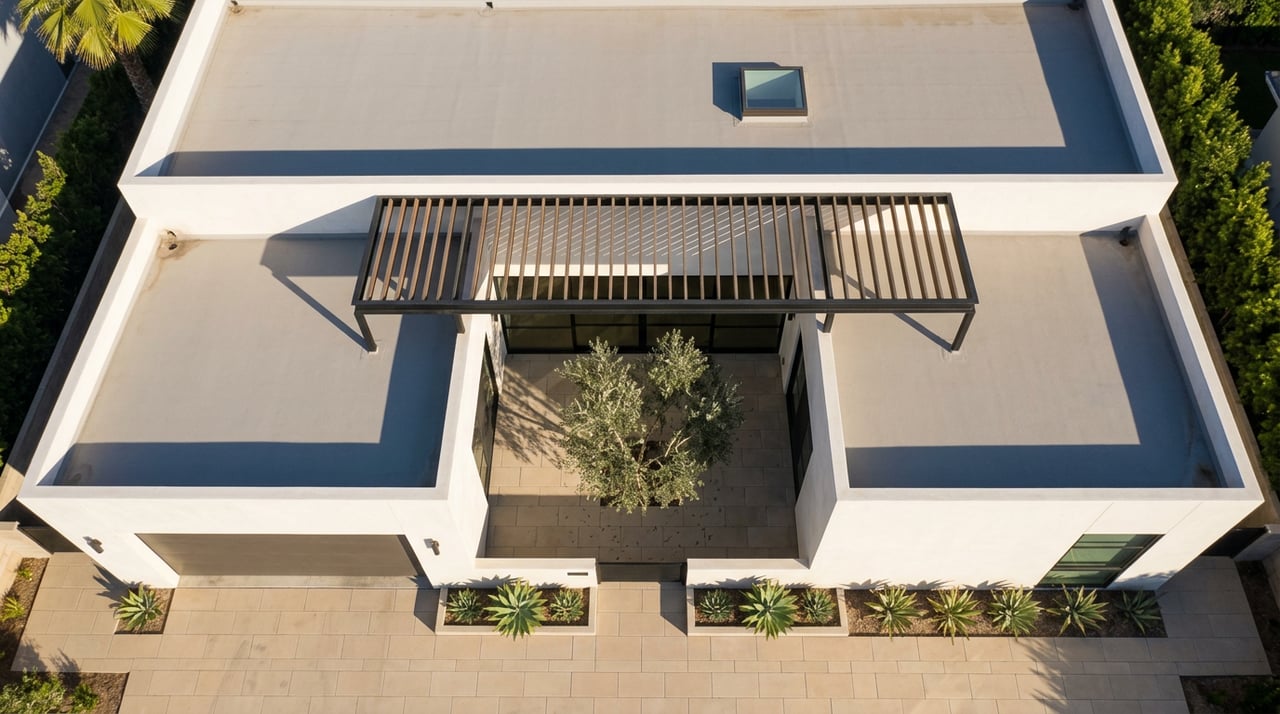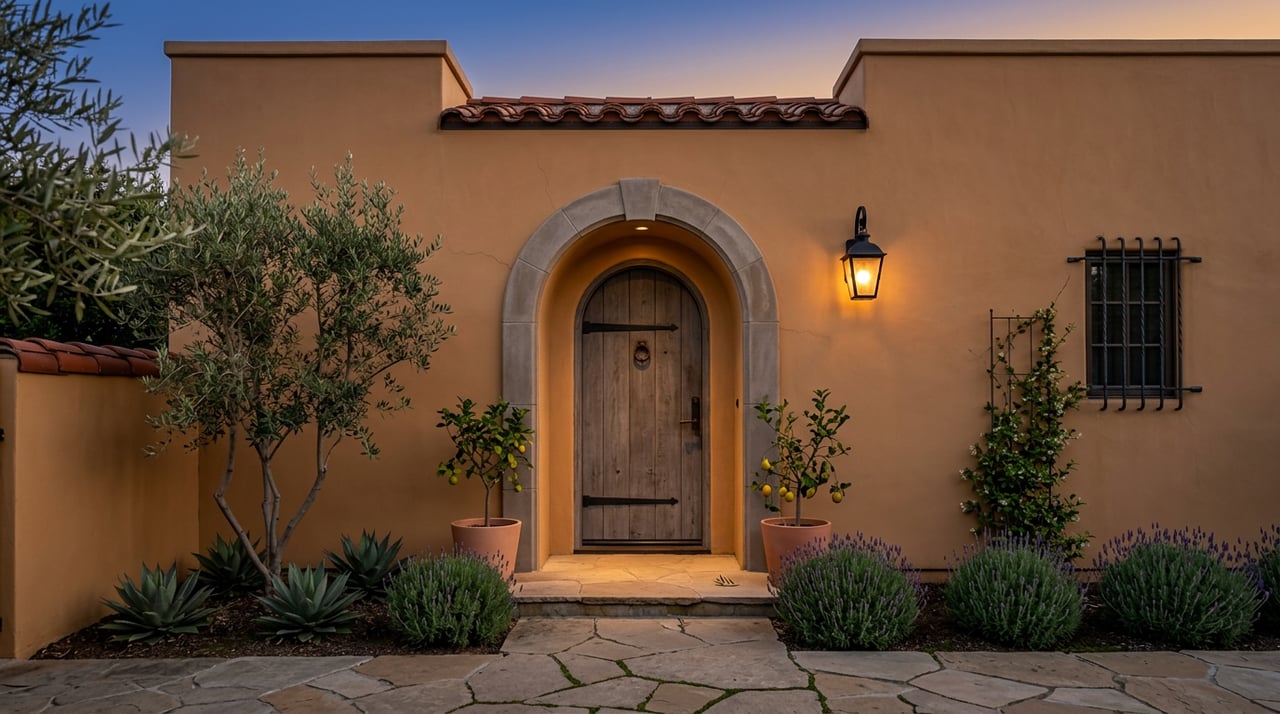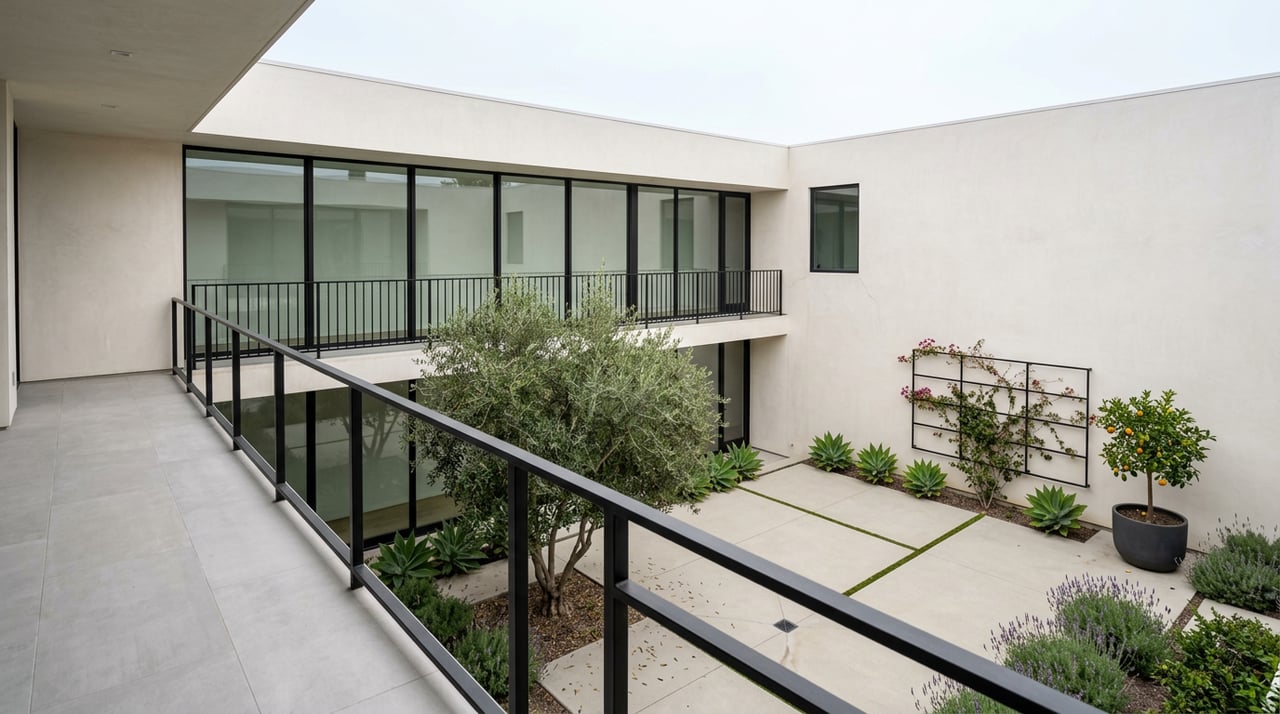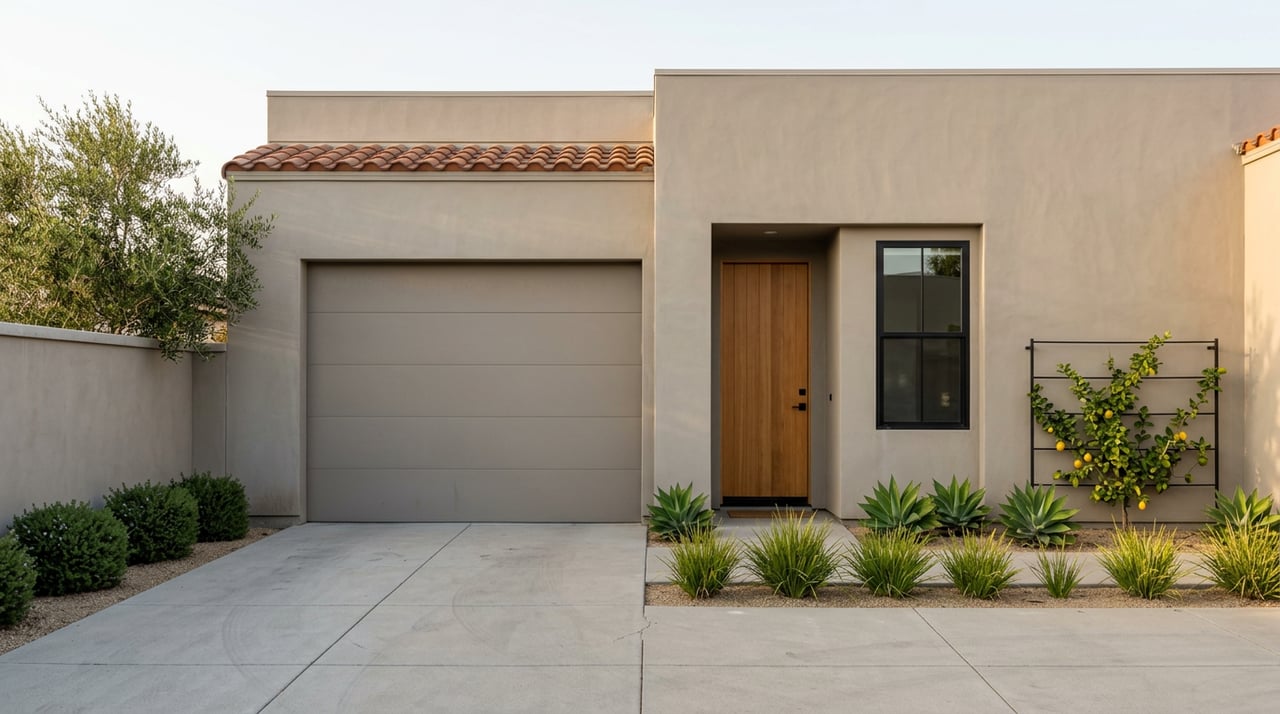
Picture two listings pulled up side by side. Both are priced at $1.3 million. One sits in a newer village inside Irvine. The other is a resale home in Arcadia. On paper, the monthly payment looks nearly identical. Then the disclosure package lands, and the Irvine listing has a line item the Arcadia listing doesn't: a Mello-Roos special tax that adds another few hundred dollars a month before the mortgage payment even enters the picture.
That line item is the real story behind an Orange County versus San Gabriel Valley comparison, and it rarely shows up in the median-price headlines. The two regions aren't just priced differently. They're taxed differently, built in different eras, and priced per square foot in ways that contradict the "OC costs more" assumption most buyers walk in with.
The Number On The Listing Isn't The Number On The Loan
California's property tax pitch is simple: 1% of assessed value, capped at 2% annual increases under Proposition 13. That's the base rate everywhere in the state, including Orange County and the San Gabriel Valley. What sits on top of that base is where the two regions diverge.
Newer Orange County master-planned communities were largely built after the 1990s using Community Facilities District financing, commonly known as Mello-Roos. Under the Mello-Roos Community Facilities Act of 1982, cities and developers fund roads, schools, and parks by selling bonds and repaying them through a special tax billed alongside property taxes. That special tax isn't based on your home's value. It's set by a formula tied to square footage, lot size, or land-use category, so two similarly priced homes in the same neighborhood can carry very different annual charges.
Communities like Rancho Mission Viejo and Ladera Ranch typically carry Mello-Roos in the $2,000 to $5,000 per year range on recent published figures, and Irvine's newer villages, including the Great Park neighborhoods such as Beacon Park and Pavilion Park, run anywhere from roughly $1,500 to over $5,400 depending on the phase of development. Stack a Mello-Roos bill on top of an HOA, which many of these same communities also carry, and the combined overhead can add several hundred dollars a month before principal and interest. Multiple sources converge on the same effective-rate math: CFD-heavy zip codes can push a homeowner's true property tax rate to somewhere between 1.5% and 1.7% of purchase price, compared to 1.1% to 1.3% in areas without a special district.
On a $1.3 million home, that gap is not trivial. A rate of 1.7% versus 1.2% is the difference between roughly $22,100 and $15,600 a year in combined base tax and special assessments, before HOA dues enter the math at all.
Not Every Orange County Home Carries This Weight
The fair comparison isn't "Orange County versus the San Gabriel Valley." It's newer construction against older construction, wherever it happens to sit. Established Orange County neighborhoods built before the Mello-Roos Act, including much of Yorba Linda and Anaheim Hills, largely predate CFD financing and carry little or none of it. Some of the earliest Orange County districts, formed in the late 1990s and early 2000s in places like Ladera Ranch, are now within a decade or two of their bond payoff dates, at which point the special tax disappears from the bill permanently.
The San Gabriel Valley's advantage is that most of its premium cities, Arcadia, Pasadena, San Marino, and Monrovia among them, are built on housing stock that dates well before this financing tool existed. That's not a guarantee against every special assessment on every parcel, particularly on newer infill or ADU conversions, but it does mean a much smaller share of SGV listings carry a CFD line item at all compared to Orange County's newest villages.
Now Flip The Number: Price Per Square Foot
Here's where the "Orange County is the expensive one" assumption breaks down. Looking at price per square foot instead of total sale price tells a different story.
| Area | Median Sale Price | Price Per Square Foot | Time Window |
|---|---|---|---|
| Orange County (countywide) | $1.2M–$1.3M | $686 | Three months ending May 2026 |
| Newport Coast (OC coastal) | $4.48M | — | Trailing 12 months |
| Santa Ana (OC inland) | ~$866K | — | Early-to-mid 2026 |
| Pasadena | $1.55M | $874 | Q1 2026 |
| Arcadia | $1.78M | $782 | Q2 2026 |
| San Gabriel | $1.2M | $733 | Three months ending June 2026 |
| Baldwin Park | $745K | — | Q1 2026 |
Orange County's countywide median gets pulled up by enclaves like Newport Coast, where homes have sold at a median around $4.48 million over the past year, while the county's inland cities, like Santa Ana at roughly $866,000 earlier this year, keep the overall average grounded. Add in the sheer volume of newer, larger-footprint construction across South and Central Orange County, and the countywide per-square-foot number lands around $686, lower than either Pasadena or Arcadia.
Pasadena and Arcadia charge more per square foot because their buyers are paying for smaller, older lots inside sought-after public school boundaries, close to job centers, with very little available land left to build on. That scarcity shows up in the price per square foot even when the total sale price sits below Orange County's coastal ceiling. The premium is for land and location, not extra square footage.
What This Actually Means If You're Comparing The Two Regions
If your priority is more house, more lot, and newer construction, and you can comfortably absorb an extra few hundred dollars a month in special taxes and HOA dues, Orange County's newer master-planned communities deliver real value on a price-per-square-foot basis. You're trading a CFD line item for larger, newer product.
If your priority is an established neighborhood, a public school boundary with a long track record, and a housing stock that's less likely to carry a special assessment, the San Gabriel Valley's premium cities cost more per square foot but skip the CFD layer almost entirely. You're paying for scarcity and age instead of new infrastructure.
Neither answer is right or wrong. The mistake is comparing the two regions using only the total sale price, which hides the mechanism actually driving your monthly payment.
Before You Write An Offer In Either Region
A few habits catch a lot of buyers off guard during escrow, regardless of which side of the comparison they land on.
- Request the Special Tax Disclosure Statement on any Orange County property before writing an offer. It's a required seller disclosure and it names the exact CFD and annual charge.
- Look up the parcel directly on the county's own Mello Roos Tax Map, maintained by the OC Treasurer-Tax Collector. MLS listings don't always reflect Mello-Roos accurately, and the amount is tied to the specific parcel, not the neighborhood in general.
- If you want to know how many years are left on a specific bond, the California Debt and Investment Advisory Commission tracks bond issuance and scheduled payoff dates by county and district.
- Ask your lender how the Mello-Roos or CFD amount factors into your debt-to-income calculation. It counts the same way a mortgage payment or HOA due does, and it can affect how much home you actually qualify for.
- In the San Gabriel Valley, don't assume every property is CFD-free just because the city has an older reputation. Newer infill construction, condo conversions, and ADU-related parcels should still be checked the same way.
For a deeper explanation of how the bonds themselves work, JVM Lending's guide to Mello-Roos walks through the mechanics in plain terms.
A Few Questions Worth Asking Directly
Does Mello-Roos ever go away? Yes. Most CFD bonds run 20 to 40 years from formation, and the special tax ends once the bond is paid off. Older Orange County districts formed in the late 1990s and early 2000s are approaching that point now, which is worth factoring into a long-term hold.
Is the entire San Gabriel Valley free of special tax districts? No single region is guaranteed free of them. The pattern follows the building era more than the city name, so an established Arcadia or Pasadena resale is far less likely to carry one than a newer infill parcel anywhere.
Does a Mello-Roos charge affect how much I can borrow? It can. Lenders include it in your housing expense ratio the same way they include property taxes and HOA dues, so a high CFD charge on a specific parcel can lower your effective purchasing power even if your income and credit otherwise qualify for more.
Comparing Orange County and the San Gabriel Valley on median price alone tells you almost nothing about what you'll actually pay each month or what you're getting for it. The real comparison lives in the disclosure package, the parcel-level tax bill, and the price per square foot once you know what's built into it.
If you're weighing a move between these two regions and want the actual numbers run on a specific property, Mel Macklin has spent more than two decades working the San Gabriel Valley side of exactly this decision. Let's Connect.