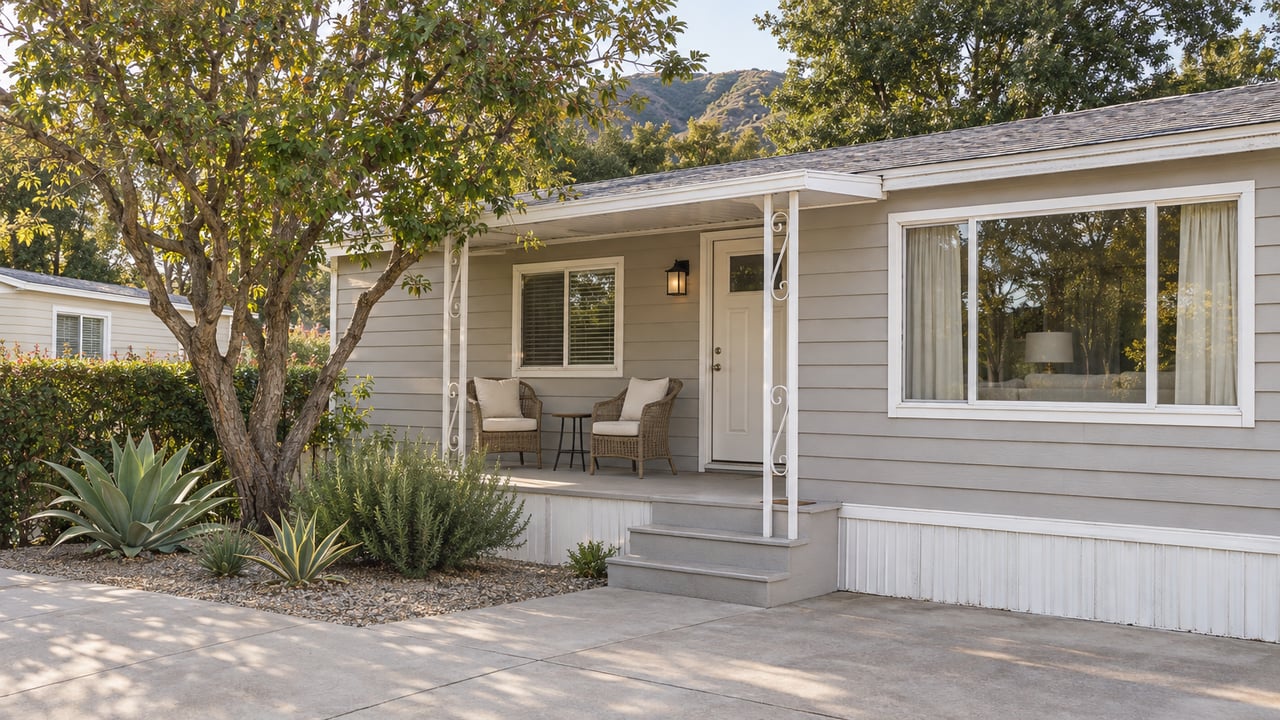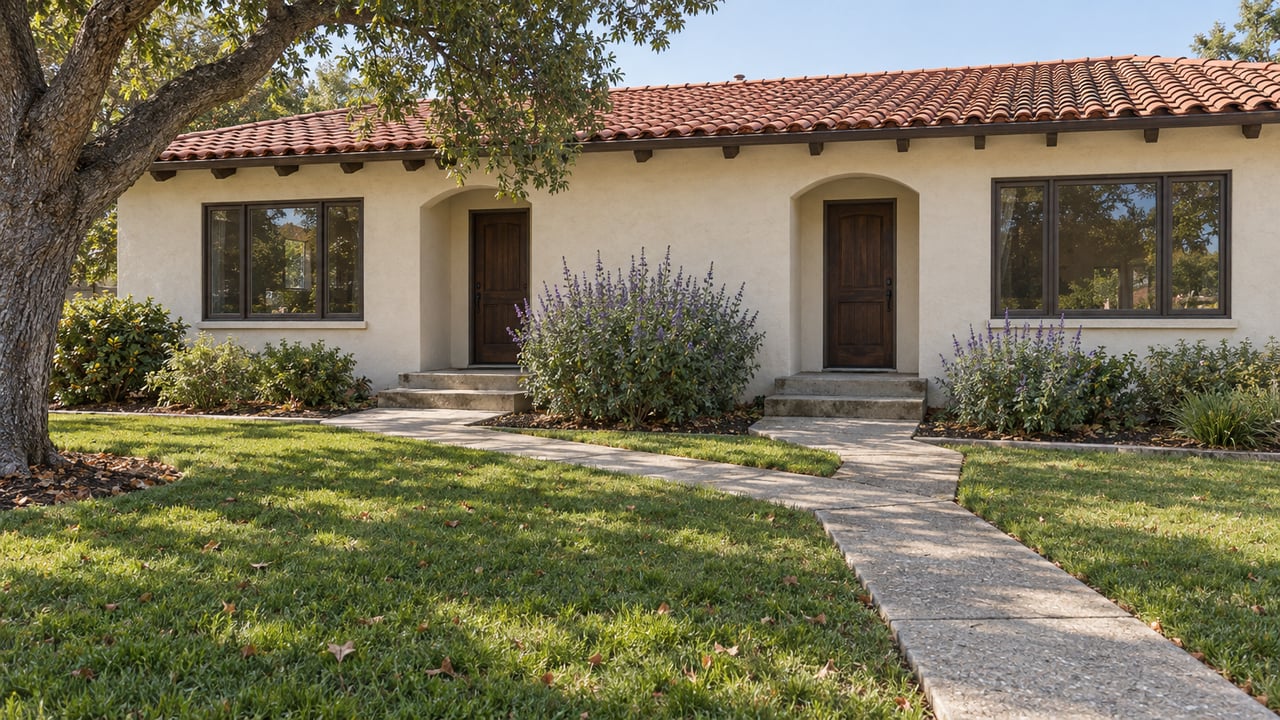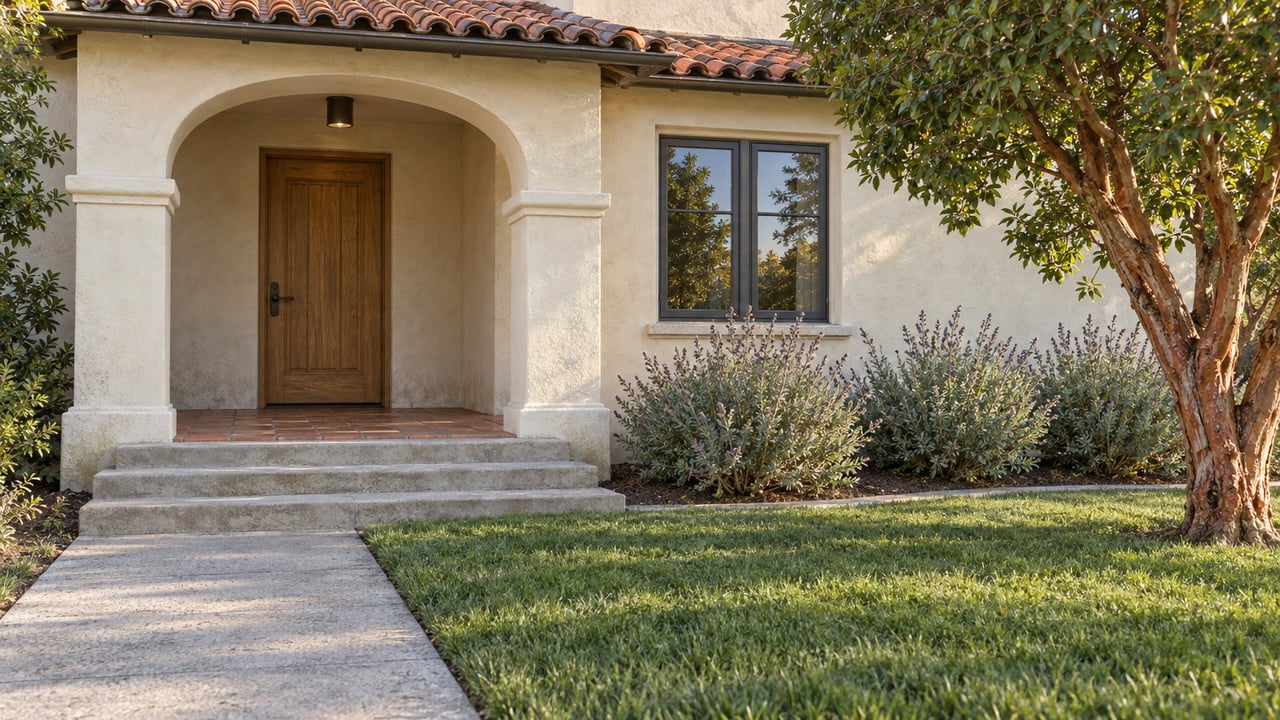
Walk down Myrtle Avenue toward the Gold Line station on a Tuesday morning and you will pass construction fencing, a tower crane, and a leasing office handing out branded tote bags. Drive ten minutes north on Canyon Boulevard into the streets below the San Gabriel Mountains and none of that exists. Same city. Same zip code. Same word, Monrovia, on every listing sheet. Two housing markets that no longer move together.
That gap matters if you are comparing homes right now, because the number everyone quotes, the citywide median, is quietly blending both of those markets into one figure that describes neither of them well.
The Number That Doesn't Match What You're Actually Buying
Over the three months ending April 2026, the median sale price for a home in Monrovia sat at $1.1 million, up just 0.1 percent from the same period a year earlier. On its face, that reads as a flat, stable market. But look one line down on the same data set: median price per square foot fell 4.7 percent over that same window.
A flat median and a falling price per square foot cannot both be telling you the same story about value. When the median holds steady while the per-square-foot number drops, the most likely explanation is a shift in what's actually selling, not a shift in what any single home is worth. Bigger, pricier homes closing in one part of town can hold the median up even while the underlying dollar-per-square-foot value is cooling almost everywhere else.
That is the first sign that "Monrovia" is not one market. The second sign is what's happening two blocks from the train station.
What's Building Up Around the Station
The City of Monrovia's own planning department lists four residential projects clustered within a few blocks of the Gold Line stop, all in some stage of construction, leasing, or recent approval:
- Arroyo at Monrovia Station, a mixed-use project at 230 West Evergreen Avenue, recently amended by City Council from 302 to 324 apartment units, including an increase in affordable units from 15 to 17
- Alexan Marmont, a 436-unit complex on Magnolia Avenue that has already topped out and is leasing, with a leasing site advertising monthly rents from roughly $2,300 to $5,500
- 127 Pomona, at the northeast corner of Pomona and Primrose, planned for 232 apartment units, 25 of them affordable
- Station Square South, at 225 West Duarte Road, adjacent to the light rail platform, planned for 296 apartment units
Add those four projects together and you get roughly 1,300 apartment units across projects that are planned, under construction, or leasing inside a corridor that, twenty years ago, was mostly single-story commercial buildings and a handful of older houses. None of that supply is competing with a detached home in the hills. Projects already leasing or under construction compete with the condos, townhomes, and small multifamily buildings in the same walkable radius of Old Town; planned projects may add to that competition.
That is the mechanism. It is not that Monrovia buyers suddenly decided attached housing was worth less. It is that brand-new, amenity-loaded rental projects are at different stages—from construction and leasing to recent approval—right where the existing attached-housing stock already sits, and that changes what a buyer is willing to pay for an older condo a block away from a building with a golf simulator and a rooftop deck.
The Two Zones, Side by Side
| Old Town / Station Corridor | The Foothills | |
|---|---|---|
| Typical product | Condos, townhomes, smaller multifamily | Detached single-family, larger lots |
| Recent price signal | Old Town's own neighborhood-level tracker showed the average house price down roughly 18 percent year over year in its most recent monthly reading | Detached homes in the hillside pockets have held a firm price floor near $1.2 million and above |
| What's driving it | Competition from the roughly 1,300-unit pipeline of new apartments within walking distance | No new construction reaches this zone, so nothing new is competing with existing inventory |
The Foothills number isn't softening because nothing new is being built there. Zoning, terrain, and lot patterns north of Foothill Boulevard have kept that inventory essentially closed to large-scale multifamily development, so a detached home up there is priced against other detached homes, not against a five-story building with a leasing office.
Why This Matters Before You Write an Offer
If you're comparing a listing near Station Square to one off Canyon Boulevard using the same citywide median as your anchor, you're using the wrong comp set for both of them. A condo near the station should be priced against other attached units in a corridor where projects already leasing or under construction compete with existing stock and planned projects may add competition, not against the citywide number that includes hillside ranch homes half a mile away. A detached foothill home should be priced against other detached foothill homes, full stop, because the station corridor's supply wave never reaches it.
The practical version of this: ask where a listing actually sits relative to Evergreen, Magnolia, Pomona, and Duarte Road, because a few blocks in either direction changes which market you're actually in. A listing agent's comps should reflect that same distinction. If they're pulling citywide averages to justify a price on either end of Monrovia, that's worth a direct question before you write anything.
This isn't a story about one part of Monrovia losing value while another wins. It's a reminder that a single median price can only tell you so much once a city starts building differently in different neighborhoods. Monrovia is doing exactly that, on purpose, as part of a long-running plan to concentrate new housing near the train station while protecting the character of the neighborhoods further out. That's a reasonable planning choice. It just means the price data has to be read zone by zone, not city-wide, if you want it to actually guide a decision.
A Few Direct Questions
Does new apartment construction near the station lower the value of nearby single-family homes? Based on the current data, the effect shows up almost entirely in attached product, condos and townhomes, that compete directly with the new rental supply. Detached single-family homes in zones without new construction, including the Foothills, have not shown the same softening.
Is Old Town still a good place to buy? It depends entirely on what you're buying and why. A condo purchased as a long-term hold in a corridor still absorbing new supply is a different bet than a single-family home in the same walkable radius. Old Town's restaurants, the Friday night fair, and the Gold Line access aren't going anywhere, but the near-term pricing picture for attached product reflects real, new competition.
How many more units are still coming? Beyond the four projects already discussed, additional sites near the station remain under review by the city's planning division, so the corridor's supply picture is not finished changing.
If you're trying to figure out which side of that line a specific address falls on, or what it actually means for resale or rental comps five years from now, that's exactly the kind of question worth a real conversation instead of a citywide average. Mel Macklin has spent years watching these blocks change in real time and can walk through what a specific listing's zone actually means for your offer. Let's Connect.